Loading...
Serving Johnson City, TN and surrounding areas. (423) 672-1860
Crumbling stone walls, leaning chimneys, and sloped lots losing soil after wet springs - we fix what is failing and build what you need to last through East Tennessee winters.
Stone masonry in Johnson City means cutting, shaping, and setting natural or manufactured stone to build or repair structures like walls, chimneys, patios, and retaining walls - most residential projects take one day for a repair up to two weeks for a full retaining wall or patio depending on size and conditions.
Johnson City sits at roughly 1,600 feet elevation in the Appalachian Highlands, and the area's freeze-thaw winters are hard on mortar joints. Water seeps into small cracks, freezes overnight, expands, and slowly breaks the joint apart - a cycle that repeats many times each winter. Homes in neighborhoods like Fairmont and Sunset, many built between the 1930s and 1960s, often have original stone foundations, chimneys, and retaining walls that have now reached the end of their mortar's useful life. The stone itself is usually fine. The mortar holding it together is what needs attention.
For homeowners with both stone and mortar joint repairs to address, brick pointing is a related service that covers deteriorating mortar joints on brick surfaces - often scoped together with stone work to reduce the number of separate contractor visits.
Run your finger along the joints between the stones on your chimney, retaining wall, or foundation. If the mortar crumbles away easily, feels sandy, or has gaps where it is completely missing, it needs to be replaced. In Johnson City's climate, this kind of wear is especially common after a winter with multiple freeze-thaw cycles - the repeated expansion and contraction slowly breaks the mortar down over time.
If you can see individual stones that are no longer sitting flat or have moved out of alignment, the structure has started to fail. A wall or chimney with displaced stones can become unstable and dangerous. On sloped lots in Johnson City, this often happens when a retaining wall was not built deep enough to handle the soil pressure behind it after a wet spring.
White, powdery streaks on the face of a stone wall are caused by water moving through the masonry and carrying dissolved minerals to the surface - called efflorescence. The deposits themselves are not dangerous, but they signal that water is getting into the wall somewhere it should not be. Left unaddressed, that moisture accelerates mortar deterioration and can eventually damage the structure behind the stone.
A retaining wall that bulges in the middle or leans away from the hillside it is holding back is under stress and may be close to failing. This is a common problem on the hilly lots throughout Johnson City, particularly after a wet spring when the soil behind the wall becomes saturated and heavy. A wall that collapses can damage landscaping, fencing, or structures below it, and the repair cost grows significantly once failure occurs.
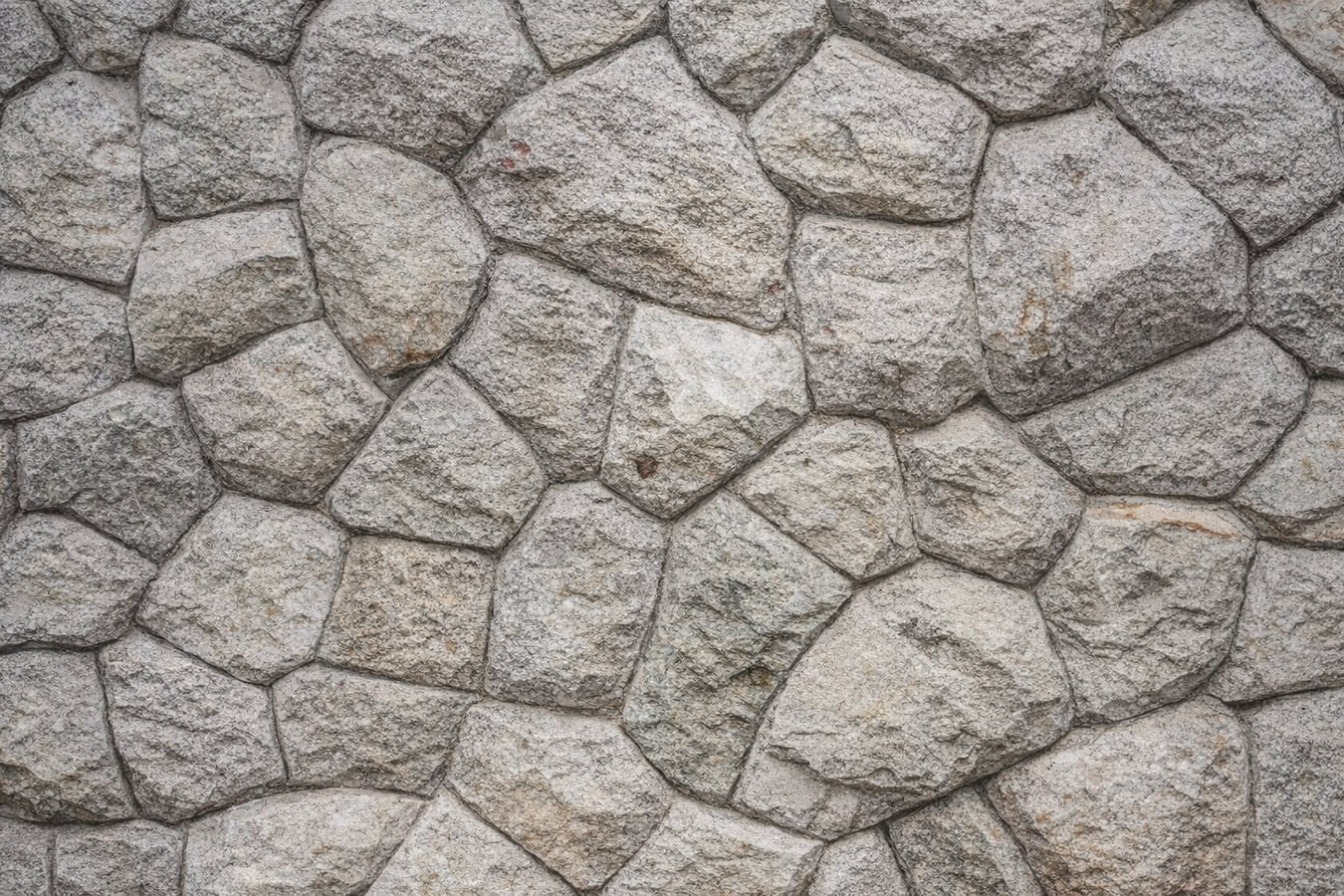
We handle stone masonry from small chimney repairs to full retaining wall builds across Johnson City and the surrounding area. That includes repointing deteriorating mortar joints on existing stone walls, rebuilding sections that have shifted or collapsed, laying new stone patios, constructing garden walls, and building retaining walls on sloped residential lots. East Tennessee has a long tradition of using locally quarried fieldstone and Tennessee crab orchard sandstone in residential construction - we source it from local suppliers when it fits the project, which keeps material costs down and produces stonework that looks like it belongs here.
For homeowners interested in adding the look of stone to an exterior wall without the weight and cost of full natural stone construction, we also work alongside our brick pointing work on properties where both stone and brick surfaces need attention. The Mason Contractors Association of America publishes the best-practice standards we follow for mortar selection, curing conditions, and joint finishing on every stone masonry project.
For sloped lots that need a wall to hold back soil and prevent erosion - built with proper drainage and footings to handle Johnson City's wet springs.
For chimneys with crumbling mortar, leaning sections, or gaps at the roofline - targeted repair that extends the life of the structure without full replacement.
For homeowners adding outdoor living space - natural stone patios and low garden walls that blend with the East Tennessee landscape.
For stone walls where the mortar has eroded or cracked - careful removal and replacement of failed joints to stop water intrusion before it reaches the stone.
Johnson City's location in the Appalachian Highlands creates conditions that put stone masonry under stress that flatter, warmer parts of Tennessee never see. The elevation means winter temperatures regularly dip below freezing and climb back above it within the same week. That freeze-thaw cycle is the single biggest cause of mortar failure here. A wall built with mortar that is not suited to this climate, or poured at the wrong time of year, will start showing cracks within a season or two. Late spring and early fall are the right windows for mortar work - not midsummer heat or winter cold. We schedule around the forecast because it genuinely affects how long the work lasts. Homeowners in Blountville and throughout Washington County share these same climate conditions, and we factor them into every project estimate.
The terrain here adds another layer of complexity. Johnson City's rolling hills mean a large share of residential lots are sloped, and sloped lots create constant soil pressure on retaining walls. After a wet spring - which is routine in this area - the soil behind a retaining wall becomes saturated and significantly heavier. A wall not built with proper drainage and deep-enough footings will eventually bow or fail. We also frequently work in Kingsport and other Tri-Cities communities where the same hillside lot challenges apply. Local stone availability is also a real advantage here - Tennessee crab orchard sandstone is quarried regionally and holds up well in this climate, which is why it has been used in East Tennessee construction for generations.
We will ask a few basic questions - what you need fixed or built, roughly where it is on your property, and whether you have photos. Most jobs need an on-site visit before we can quote accurately. We reply within one business day.
We walk the project with you, take measurements, and note anything that affects the job - slope, access, condition of existing mortar. You get a written estimate that breaks down labor and materials separately so you know exactly what you are paying for.
If your project requires a building permit - most common for retaining walls over a certain height - we handle the application with the Johnson City Building and Codes Department. This adds a few days to the timeline but protects you by ensuring the work is inspected.
The crew arrives in the morning and works through the afternoon. Expect noise from cutting tools and some dust near the work zone. When the work is done we clean up the site, walk you through the finished project, and give you specific curing instructions before we leave.
Free written estimate. No obligation. We reply within one business day.
(423) 672-1860Every project gets a written estimate that breaks down labor and materials separately. You know exactly what you are agreeing to before anyone picks up a tool. If something unexpected comes up during the job, we talk to you about it before we proceed.
Using the wrong mortar mix is one of the most common causes of early failure in East Tennessee. Mortar that is too hard does not flex with the freeze-thaw cycle and cracks the stone. We select mortar for the specific stone type and local conditions on every project.
We source Tennessee crab orchard sandstone from regional suppliers when it fits the project. Using local stone keeps material costs lower than shipping from out of state, and it produces work that matches the character of the area - especially important when repairing or extending existing stonework on older homes.
We know the Johnson City Building and Codes Department requirements for retaining walls and structural masonry work. Homeowners can verify contractor licensing through the Tennessee Department of Commerce and Insurance - we welcome that check. We handle the permit process for qualifying projects as part of our standard scope.
Stone masonry is one of the few home improvements that adds genuine, lasting value to a property. When the work is done right - with the correct mortar, proper drainage, and footings sized for your site - it holds up for decades and looks like it has always been there. That is the standard we work to on every project in Johnson City.
For permit questions specific to Johnson City, the Johnson City Building and Codes Department maintains current thresholds and requirements. For contractor license verification, use the Tennessee Department of Commerce and Insurance free lookup tool.
Deteriorating mortar joints between bricks removed and replaced to stop water from getting behind the brick face.
Learn MoreFull retaining wall builds for sloped residential lots, including drainage and proper footings for Johnson City soil conditions.
Learn MoreSpring and fall booking windows fill quickly - contact us now to lock in your project date before the season is gone.