Loading...
Serving Johnson City, TN and surrounding areas. (423) 672-1860
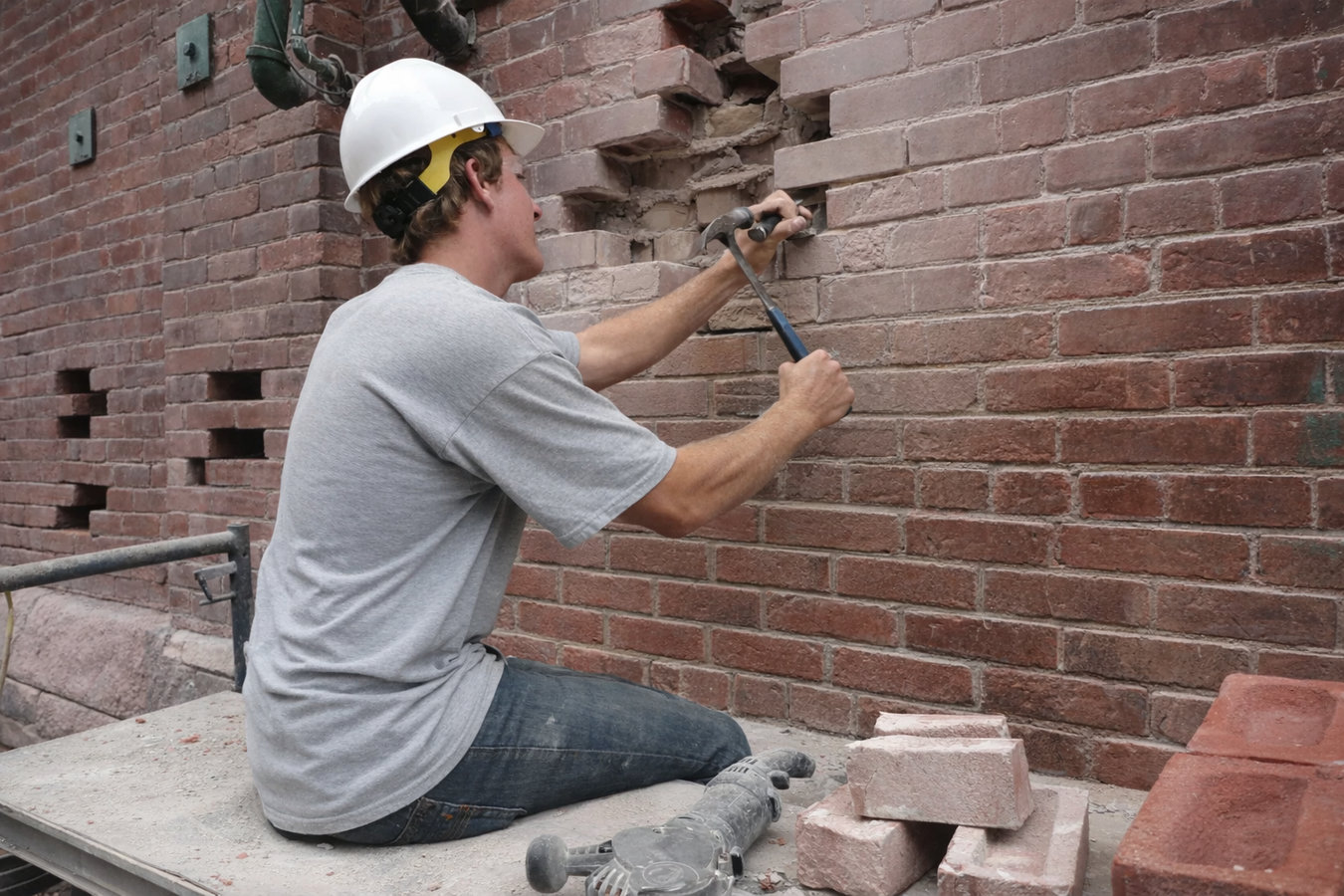
Crumbling mortar, cracked bricks, and stair-step cracks get worse with every freeze-thaw cycle. We assess the damage honestly, match the mortar to your home, and fix what needs fixing - with a written estimate before any work starts.
Brick repair in Johnson City covers removing deteriorated mortar and replacing it with a matched mix, cutting out and swapping cracked or spalling bricks, and addressing the water pathways that caused the damage - most residential jobs take one to three days and cost far less than waiting until the damage reaches the structural level.
Most brick damage starts at the mortar joints - the softer material between bricks that absorbs movement and moisture so the bricks themselves do not have to. When those joints fail, water gets in, freeze-thaw cycles do the rest, and eventually the brick face starts to crack or flake. Catching it at the mortar stage is the least expensive path. Catching it after the brick is physically damaged still beats waiting until sections of wall need to be rebuilt.
Homeowners dealing with widespread mortar wear across a larger surface area often benefit from our masonry restoration service, which addresses full-facade repair as a single coordinated project rather than spot repairs.
Run a finger along the joints between your bricks. If the mortar feels soft, crumbles easily, or has receded more than a quarter inch below the brick face, water is getting in. In Johnson City's wet climate, this tends to accelerate quickly once it starts.
Diagonal cracks that follow mortar joints in a stair-step pattern are a common sign of foundation settling or soil movement - both relevant in Johnson City's clay-heavy soils. These cracks are worth having a mason evaluate, especially if they have appeared recently or seem to be widening.
If brick surfaces are flaking off or a chalky white film appears on the face, moisture has been moving through the wall and working its way back out. The white residue - called efflorescence - is mineral salt left behind as water evaporates. It often shows up here after a wet winter or a rainy spring.
Damp spots, peeling paint, or water stains on interior walls that back up to exterior brick indicate the masonry has failed enough to let water through. This is more urgent because water inside the wall can damage framing and insulation, not just the masonry itself.
We approach every brick repair job by looking at the full picture - not just the visible crack or gap, but what caused it and whether anything nearby is heading in the same direction. The repair itself starts with removing damaged material properly: grinding out mortar to the right depth, or carefully cutting out compromised bricks so replacements can be set in with a solid bond. Rushing either step means the repair fails sooner than it should.
For homes built before the 1960s - common in Johnson City's older neighborhoods - we match the mortar mix to the age and softness of the original brick. Using modern hard mortar on old brick transfers stress onto the brick face rather than the joint, eventually causing the bricks to crack. We also look at the water entry points: a missing chimney cap, poor drainage grading, or deteriorated caulk around windows can undo a repair quickly if they are not addressed. If the scope extends to full-wall or facade restoration, our driveway pavers and exterior hardscape services can be combined in the same project visit.
Best for homeowners who see recessed, crumbling, or missing mortar but whose bricks are still structurally sound.
Designed for walls where individual bricks have cracked, spalled, or shifted loose while the surrounding wall remains intact.
Covers visible joint gaps, damaged mortar caps, and loose bricks on chimneys exposed to full-weather conditions.
For pre-1960 Johnson City homes where a softer, lime-based mortar mix is required to avoid damaging original soft brick.
Johnson City averages around 44 inches of rainfall per year and sits at roughly 1,600 feet in the Appalachian Highlands - a combination that is hard on masonry. The elevation brings more freeze-thaw cycles each winter than lower-elevation Tennessee cities, and the wet springs keep moisture in contact with masonry longer than in drier climates. Mortar joints that are even slightly compromised deteriorate faster here than most homeowners expect, which is why repairs that get delayed one season often look noticeably worse by the time a contractor arrives the next.
The region also has clay-heavy soils that expand when wet and contract when dry. That seasonal movement can shift foundations slightly and produce the stair-step cracking patterns common in Johnson City's older neighborhoods. We work throughout the area, including Gray and Elizabethton, where the same soil and climate conditions apply and older homes with aging brickwork are common across established residential streets.
We respond within one business day. We will ask where the damage is and how long you have noticed it. Spring and early summer are busiest, so calling ahead gives you more scheduling flexibility.
A mason walks the damaged area with you, looks at surrounding sections for early-stage issues, and checks for water entry points. You receive a written estimate covering exactly what will be done and what it costs - before you agree to anything.
The crew removes damaged mortar or loose bricks with grinders or chisels - noisy for a few hours - then cleans the joints and applies new material in layers. Work that looks slow is usually work being done right.
We clean the work area, walk you through the finished repair, and let you know about anything else spotted during the job. New mortar needs 24 to 48 hours before it should get wet - we will confirm what to watch for before we leave.
No obligation, no surprise pricing. We respond within one business day.
(423) 672-1860Johnson City has a large share of homes built before 1960, and those older bricks need a softer mortar mix. Using modern hard mortar on older brick causes bricks to crack rather than joints - a more expensive problem. We assess the existing material before mixing anything new.
Many homeowners have had brick repaired once, only to see the same damage return because the water entry point was never addressed. We look at drainage, caps, caulk, and grading - not just the visible crack - so the repair actually solves the problem.
We have been working on homes across the Tri-Cities region long enough to know which neighborhoods have the most common damage patterns and which soil conditions drive the stair-step cracking that shows up in Johnson City's older areas.
You see a written breakdown of every item before we start. If something unexpected turns up during the job, we tell you before adding any work - not after. The final invoice matches what you agreed to.
The National Park Service publishes Preservation Brief guidelines for repointing mortar in historic masonry that inform how we approach older brick homes in Johnson City - the same careful technique that protects original materials instead of accelerating damage.
Paver installation and repair for driveways where frost heave or settling has shifted or cracked the surface.
Learn MoreFull-facade assessment and repair for homes where widespread mortar failure and brick damage need a coordinated approach.
Learn MoreAnother freeze-thaw season turns manageable repairs into bigger ones - get a free written estimate now and lock in your date.