Loading...
Serving Johnson City, TN and surrounding areas. (423) 672-1860
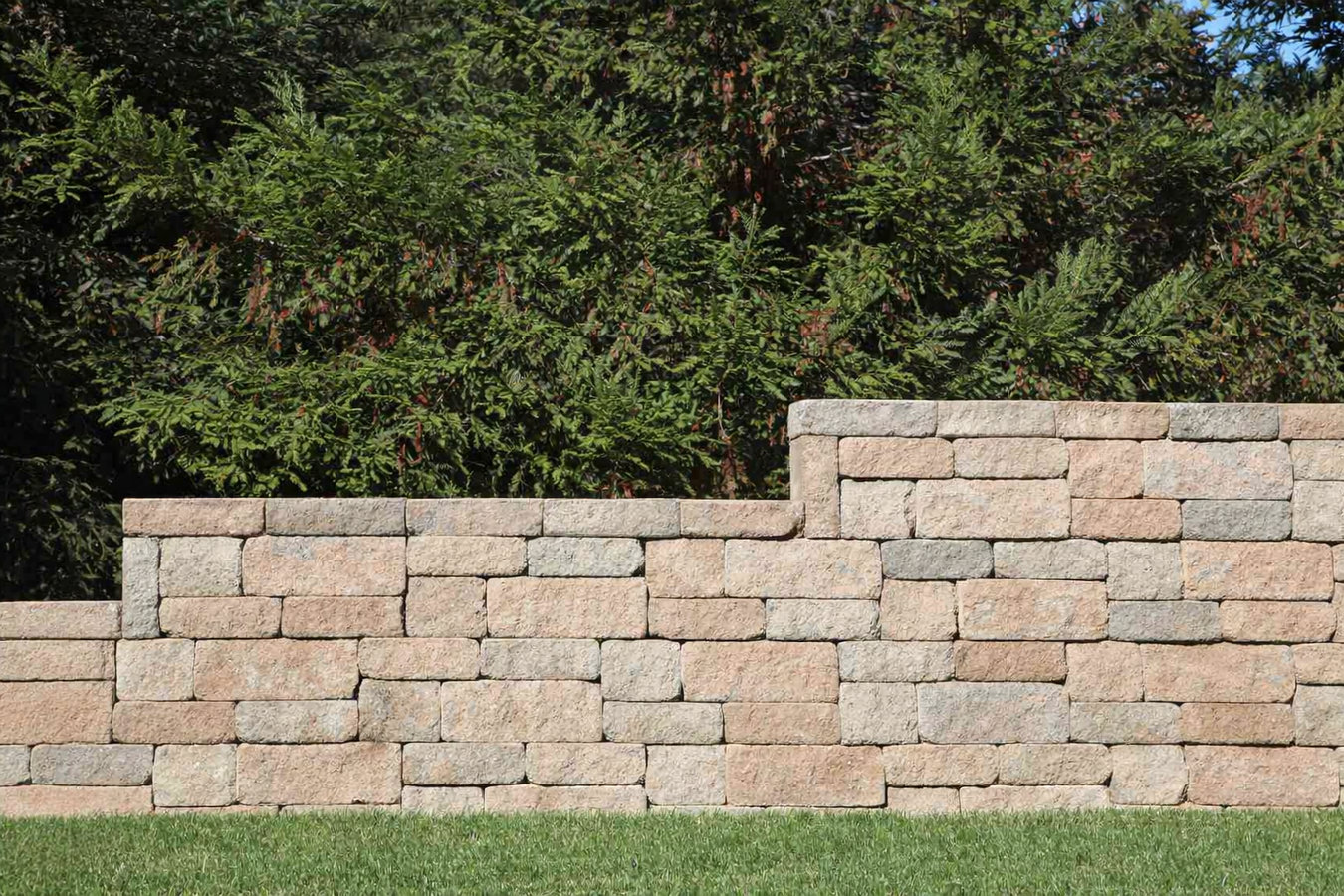
Soil washing toward your home, an eroding bank you cannot use, or an older wall that is starting to lean - we build retaining walls in Johnson City that hold, drain correctly, and look right year after year.
Retaining wall construction in Johnson City holds back soil on sloped or uneven property, keeps it from sliding or washing away toward your driveway or foundation, and most residential walls can be built in two to four days once the permit is approved and the crew is on site.
Retaining walls here are not a luxury - for many Johnson City homeowners on hillside lots, they are a practical necessity. The Ridge and Valley terrain means sloped yards are the norm, and heavy spring rainfall accelerates erosion every year you leave a problem unaddressed. If water is already moving toward your foundation, a wall combined with proper grading is often the most direct fix. We also handle the masonry restoration work that older retaining walls sometimes need before a full replacement is necessary.
The most common reason walls fail is not the material - it is the drainage behind them. Water that has nowhere to go builds up pressure the wall was never designed to handle. We install proper drainage as part of every wall we build, because skipping that step is the reason most retaining walls fail.
If you notice a trail of dirt, mud, or gravel moving downhill toward your driveway, garage, or foundation after a heavy rain, your slope is actively eroding. Johnson City's frequent spring and summer storms accelerate this process, and what starts as a minor nuisance can become a foundation drainage problem within a few seasons.
If part of your yard is so steep that mowing it feels unsafe or the area has become unusable, a retaining wall can turn that slope into a flat, terraced space. Many Johnson City homeowners on hillside lots have transformed steep, eroding banks into level garden beds or usable lawn areas with a well-placed wall.
If you have an older wall - timber, block, or stone - and you can see it starting to tilt forward or notice cracks running through the joints, that wall is under stress it can no longer handle. Leaning walls do not stabilize on their own. Catching this early means a repair or replacement rather than an emergency collapse.
Standing water that collects at the bottom of a sloped area after rain is a sign the grade is directing water toward a low point - and if that low point is near your foundation or crawl space, it is a drainage problem. Johnson City's clay-heavy soils make this especially common because water does not drain through clay quickly.
We build retaining walls from concrete block, natural stone, and poured concrete - the materials best suited to Johnson City's wet winters and freeze-thaw cycles. Every wall we build includes proper drainage behind it: gravel backfill and a drainage pipe so water moves through and away rather than building up. We also handle concrete block walls for homeowners who want a cost-effective, low-maintenance structure that holds up in this climate.
For walls four feet and taller, we handle the building permit application through the City of Johnson City or Washington County, depending on your address. The permit process adds time to the start date but also adds protection - you get documentation confirming the wall was built to code, which matters at resale. We coordinate the inspection so you do not have to.
The most practical choice for most Johnson City lots - durable, frost-resistant, and cost-effective for walls of any height.
For homeowners who want a wall that blends into the landscape and looks like it has always been there.
Best suited for taller walls or challenging soil conditions where maximum structural strength is needed.
For older walls that are leaning, cracking, or showing drainage failure before they reach the point of full replacement.
Johnson City sits in the Ridge and Valley region of the Appalachians, and sloped lots are the norm rather than the exception. That terrain creates constant soil movement and erosion pressure, especially in the neighborhoods that climb toward ridges outside the city center. The city also averages around 45 inches of rain per year, with heavier rainfall common in spring and late summer - which puts sustained pressure on any retaining structure and accelerates erosion on unprotected slopes. Homeowners in Colonial Heights and Kingsport deal with the same hilly terrain and benefit from the same drainage-first approach.
The clay-heavy soil common in this part of East Tennessee adds another complication. Clay holds water rather than draining freely, which means it expands when wet and contracts when dry - and that movement creates lateral pressure against a retaining wall that sandy or loamy soil would not. Johnson City winters are also cold enough to freeze the ground repeatedly from November through March, and repeated freezing and thawing puts stress on any structure in the soil. A wall that was not built with proper drainage and deep enough footings can heave, crack, or shift over a few winters. Building to these local conditions from the start is not optional - it is the whole job.
Reach out by phone or form and we respond within one business day. The first conversation helps us come prepared. We then visit your property, look at the slope, soil, drainage patterns, and any access challenges, and give you a written estimate with material options explained in plain terms.
If your wall requires a building permit - common for walls over four feet in Johnson City - we handle the application. Permit processing typically adds one to three weeks to the start date. Once the permit is approved, you get a confirmed start date and a clear project timeline.
We excavate below the frost line, set the foundation, and build the wall course by course with drainage material installed behind it as we go. For a typical 20-to-40-foot wall, construction takes two to four days. The drainage step is not optional - it is what separates a wall that lasts from one that fails.
If a permit was pulled, we coordinate the city or county inspection. We then clean up the work area, restore the surrounding yard as much as possible, and walk the finished wall with you - explaining what to watch for in the first year and how to reach us if anything needs attention.
Free written estimate. Permits handled. We respond within one business day.
(423) 672-1860We install gravel backfill and drainage pipe behind every retaining wall we build. This is not an upgrade - it is standard practice, because water trapped behind a wall is the most common reason walls lean, crack, or collapse within a few years. You will not need to ask us whether we do this step.
We handle the permit application through the City of Johnson City or Washington County, coordinate the inspection, and hand you documentation showing the wall was built to code. That documentation protects your investment and your home's resale value - skipping it to save time creates problems at closing.
We build wall foundations below the frost line for this region, not to a generic depth. That is what keeps your wall in the same position in March that it was in October, even after a hard winter with repeated freeze-thaw cycles.
We have built retaining walls on hilly lots throughout Johnson City and the surrounding area - on the same clay-heavy soil and steep grades that challenge contractors used to flat, sandy ground. Ask us specifically about your slope and soil conditions before you decide.
A retaining wall is only as good as the drainage system behind it and the foundation depth below it. We get both right before we start stacking the first course, because those are the parts you cannot fix after the wall is built.
The National Concrete Masonry Association publishes design and installation standards for segmental retaining walls. The University of Tennessee Extension also provides guidance on managing erosion and drainage on sloped residential properties.
Older retaining walls that are cracking or showing wear can often be restored before a full rebuild is necessary.
Learn MoreA concrete block wall is a cost-effective, frost-resistant option for homeowners who want a straightforward retaining structure without the cost of natural stone.
Learn MoreEvery wet season you wait makes the erosion worse and the eventual fix more expensive. Reach out today for a free written estimate.